
What Are Embroidered Patches?
Embroidered patches are fabric patches decorated with thread. They are often used to represent logos, brands, names, or custom designs on clothing and accessories. These patches are created by stitching threads onto fabric, resulting in a durable and colorful design that can withstand wear and tear. Compared to printed patches, embroidered patches have a textured and professional appearance.
These patches can be ironed or sewn onto various items, making them a popular choice for custom apparel, uniforms, and branding materials. Their versatility makes them ideal for promotional products, team uniforms, fashion designs, and more.
How Are Embroidered Patches Made?
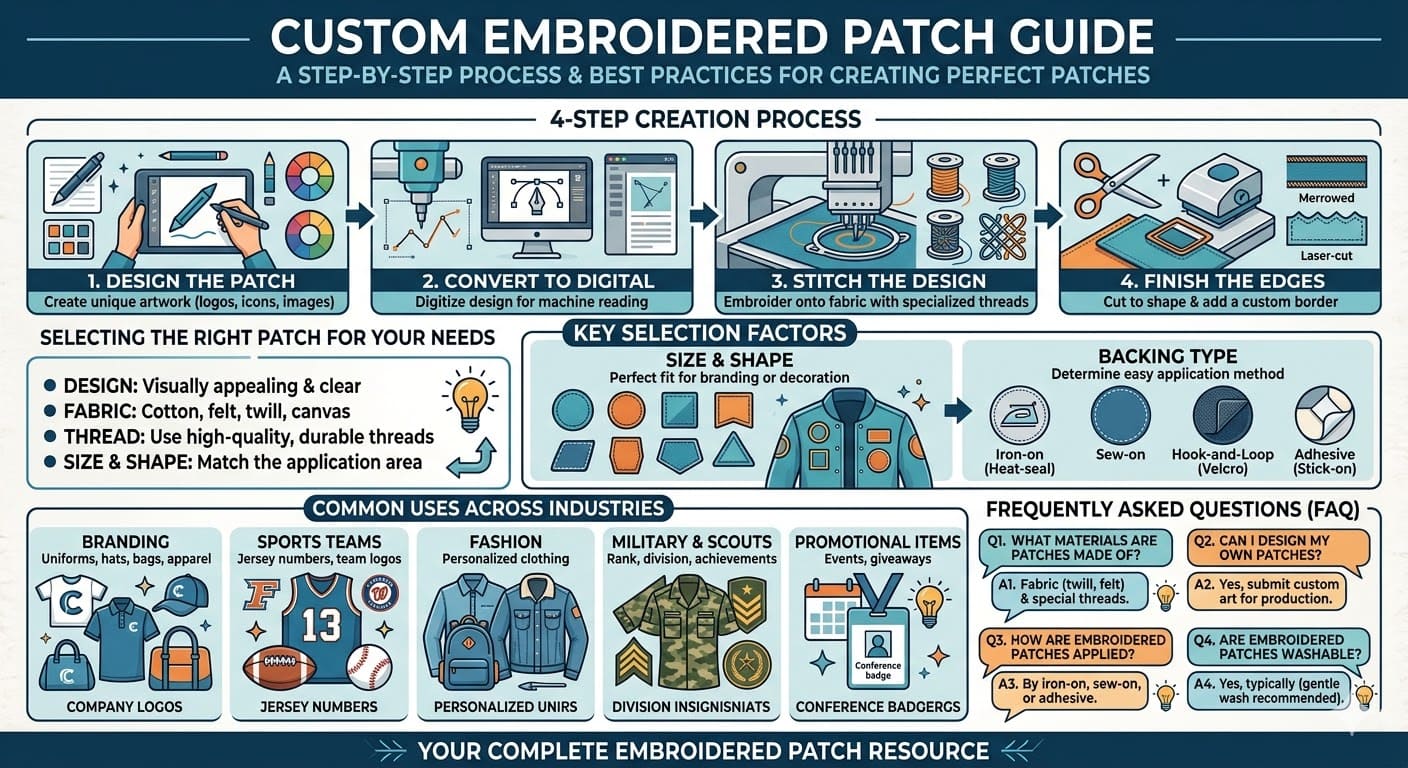
Step 1: Design Your Patch
The first step in creating an embroidered patch is designing the artwork. This design can be anything from a simple logo to a detailed image. The design needs to be clear and easy to translate into stitches.
Step 2: Convert the Design into a Digital Format
Once the design is ready, it needs to be digitized. This involves converting the design into a format that a machine can read and use for stitching. The process is done using embroidery software, which helps ensure the patch will be made with precision.
Step 3: Stitch the Patch
The digitized design is then loaded into an embroidery machine, which uses specialized threads to stitch the design onto the fabric. Depending on the complexity of the design, this process may take some time.
Step 4: Cutting and Finishing
After the stitching is complete, the embroidered patch is cut to its desired shape. This could be round, square, or custom-shaped. The edges are then finished to prevent fraying, often using a special border or heat-seal backing.
How to Choose the Best Embroidered Patch for Your Needs
When selecting an embroidered patch, consider the following factors:
- Design: Choose a patch design that is both visually appealing and functional for its intended purpose.
- Fabric: The fabric used for the patch should be durable and suitable for the application, such as cotton for casual wear or canvas for rugged use.
- Thread Quality: High-quality threads will ensure that the patch lasts longer and retains its color.
- Size and Shape: Make sure the patch fits the area where it will be placed, whether on clothing, bags, or accessories.
- Backing Type: Decide whether you need an iron-on, sew-on, or adhesive backing for easy application.
Common Uses of Embroidered Patches
Embroidered patches are used in various industries and applications. Here are some common uses:
- Branding: Companies use embroidered patches on uniforms, hats, and bags as part of their branding efforts.
- Sports Teams: Embroidered patches are used to display team logos and player numbers on jerseys and gear.
- Fashion: Many fashion brands use embroidered patches to personalize denim jackets, backpacks, and other apparel.
- Promotional Items: Custom patches are popular for giveaways at events or as part of a promotional campaign.
- Military and Scouts: Military units and scout groups often use embroidered patches to identify rank, division, and achievements.
Frequently Asked Questions (FAQ)
What are embroidered patches made of?
Embroidered patches are typically made of fabric such as twill or felt, with threads stitched into the fabric to create the design.
How do I apply an embroidered patch?
Embroidered patches can be applied using iron-on backing, sewn on by hand or machine, or attached with adhesive backing.
Can I wash embroidered patches?
Yes, embroidered patches can usually be washed, but it's recommended to turn the garment inside out or wash by hand to prevent damage.
Can I design my own embroidered patches?
Yes, many companies offer custom embroidery services where you can submit your design and have it turned into a patch.